How Crows Use Tools Without Thinking Like Humans
New Caledonian crows make and choose tools, but what do the experiments show? Explore the difference between impressive behavior, learning and claims about human-like thought.
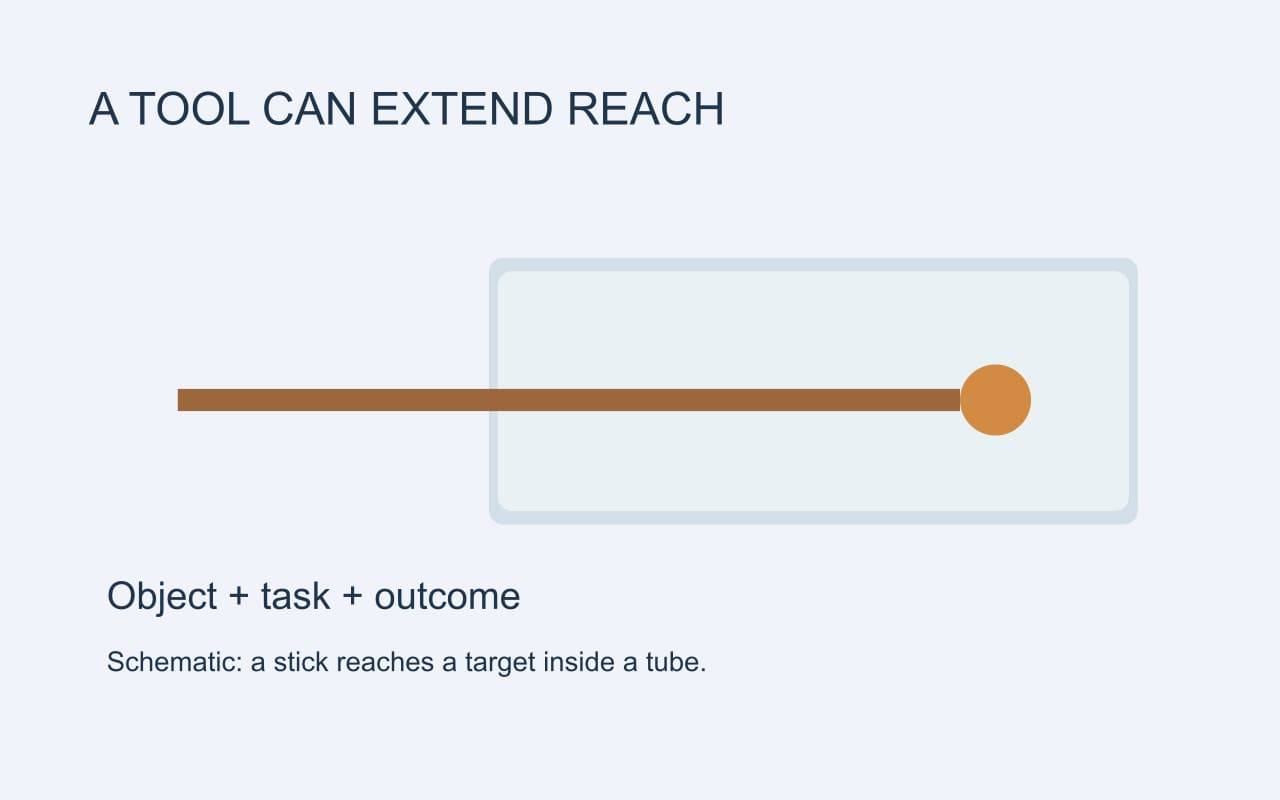
A bird picking up a stick can be an ordinary sight. A bird using that stick to reach inaccessible food raises a different set of questions. Does it choose the right size? Can it alter the material? What has it learned, and what comes from an inherited tendency to manipulate objects? New Caledonian crows have made these questions especially productive because their tool use can be studied through carefully designed tasks.
Begin with a particular species
New Caledonian crows are the focus of a substantial body of tool-use research. That specificity matters. A headline about a crow solving a problem does not establish that every bird called a crow performs the same behavior in the wild. Different species encounter different environments and have different behavioral histories.
The useful starting point is the task itself: obtaining food with a tool. Once that is clear, researchers can change aspects of the problem and observe what the birds do. This moves the discussion beyond a general declaration that the animal is clever toward questions that an experiment can actually investigate.
The tool has to fit the problem
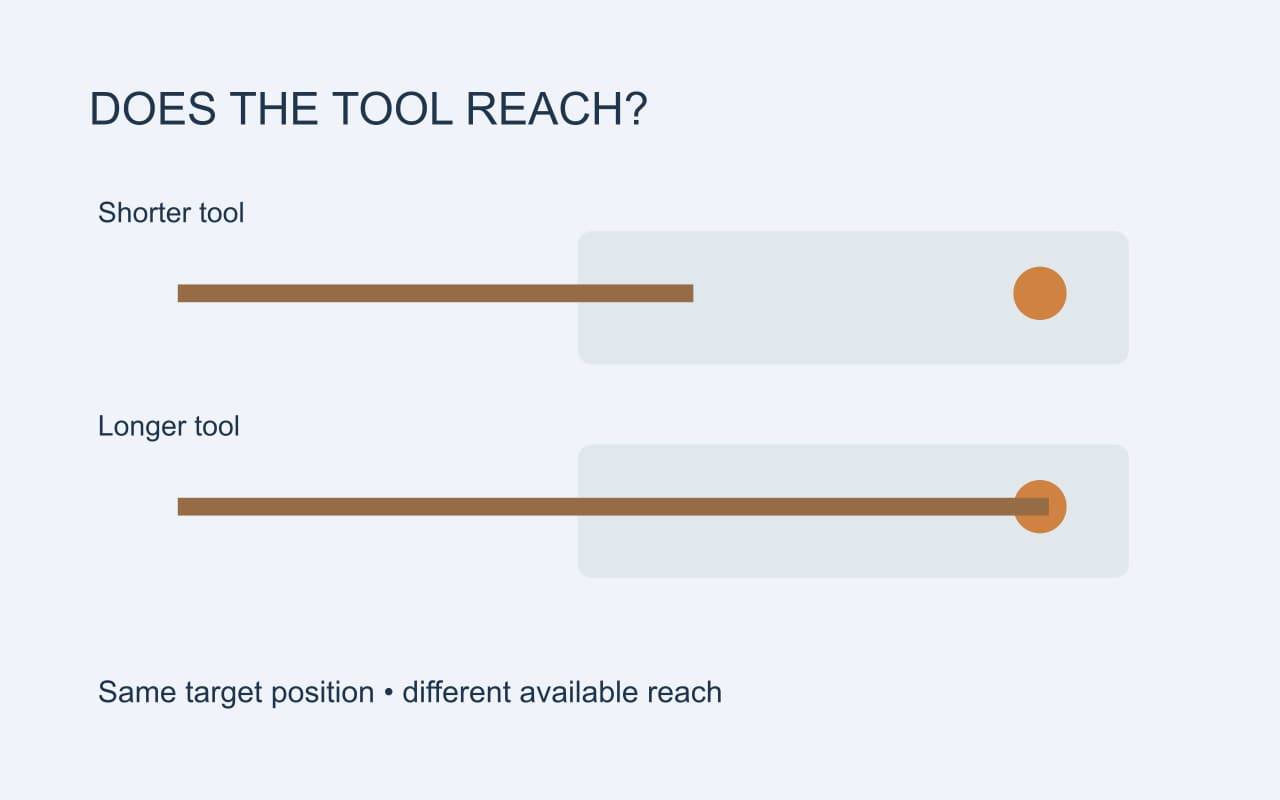
Oxford researchers describe experiments in which New Caledonian crows selected sticks for food placed at different distances inside a tube. The birds generally chose tools long enough for the task. In another problem involving a narrow opening, they adjusted tool width. Those results show behavior more selective than simply picking up any available object.
Picture the distinction using an ordinary human task. Having a collection of keys is different from selecting one that fits a lock. The comparison explains the structure of a problem, but it does not tell us that the crow reasons exactly as a person does. The experiment supports conclusions about the observed choices, with further questions still open.
Making and using are related but distinct
A ready-made tool can already have the required shape. Modifying a branch introduces another stage: the animal must produce something usable from the available material. Researchers can examine which features are altered, whether the resulting tool works and how the behavior changes with experience.
That sequence provides more information than a short video of the final successful attempt. A complete account includes unsuccessful choices, preparation and repeated trials. The ending may be spectacular, but the path to it helps distinguish several possible explanations. A bird's persistence and the particular materials supplied can both affect what happens.
Young birds offer a different research question
The Oxford group also studied the development of tool behavior in hand-raised young crows. Birds without demonstrations of tool use still developed stick-based food retrieval. This indicated that direct teaching was not necessary for the basic behavior in those study conditions. It did not establish that experience and social information are irrelevant to every aspect of wild tool making.
Indeed, the researchers noted differences between the relatively crude products of young captive birds and sophisticated tools made by wild adults. Development, individual practice and possible social learning deserve separate investigation. A behavior can have inherited foundations and still become more skilled through experience.
A surprising result is not a complete mind map
An experiment tells us how particular animals behaved under particular conditions. Interpreting the mental processes behind that behavior requires care. A successful choice could reflect several interacting capacities, and a single task rarely separates all of them. Researchers therefore design comparisons and follow-up problems rather than ending with a label such as genius.
This is not a reason to find the birds less interesting. The questions become richer when the alternatives are explicit. Does the animal respond to length, weight or a learned cue? What happens if the familiar arrangement changes? The design of the next experiment can be as revealing as the viral clip that first attracted attention.
Watch a demonstration with better questions
If you see a video of a tool-using bird, look for information about species, previous experience and the complete sequence. Ask whether the footage shows one trial or a selection from many. Notice whether the tool was supplied in its useful form or had to be made. These details help you understand what is being demonstrated.
Avoid treating an edited clip as proof of an exact human-like thought process. Equally, do not dismiss a complex behavior simply because learning contributes to it. Learning is itself part of what animal-behavior researchers study. The strongest explanation is the one that fits the evidence, not the one that makes the most dramatic comparison with people.
Tool use changes a familiar boundary
Observations of tools in other animals have repeatedly challenged simple claims about human uniqueness. Jane Goodall's work is another important example, explored in our feature on the Gombe observations. Comparing cases is valuable when it preserves the differences between species, settings and methods rather than flattening them into one competition.
There is no need to supply wild birds with experimental objects or food to appreciate the research. Watch ordinary behavior respectfully and use documented studies to explore the larger questions. New Caledonian crows are remarkable precisely because their abilities invite detailed investigation. A careful account of what they do is more interesting than declaring them small humans in feathers.