How Octopuses Change Color and Texture
Octopus camouflage combines changing pigments, skin texture and body posture. Discover how chromatophores and papillae contribute to a remarkable living disguise.
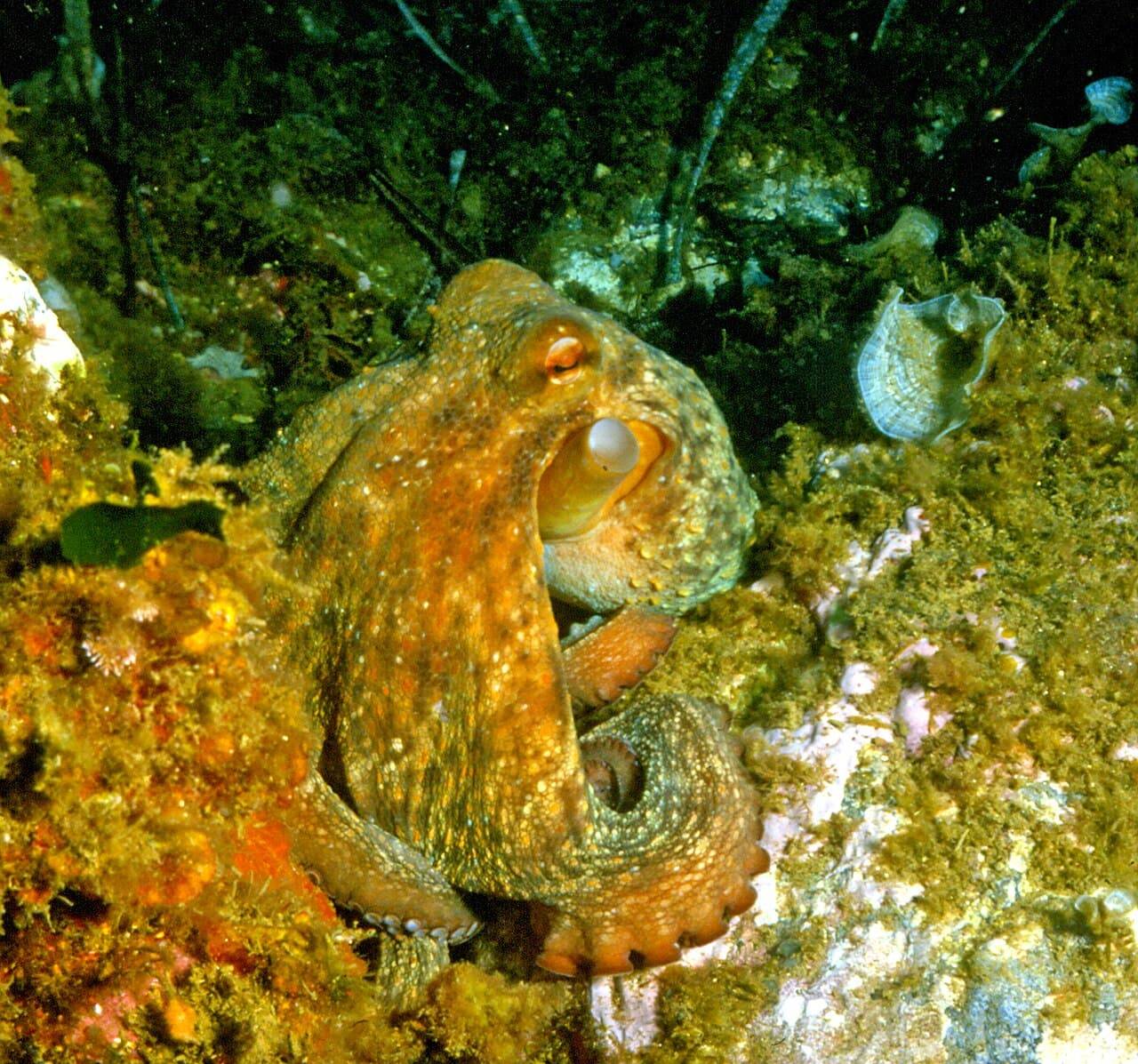
An octopus can make a patch of seabed seem to come alive. What looked like a mottled rock becomes a moving animal, then takes on a different appearance as it crosses another surface. The transformation is more than a change of color. Pigment, texture and body position work together, helping explain why a still photograph captures only one moment in a much more flexible system.
Color change begins in the skin
The Smithsonian's account of cephalopods describes chromatophores: structures containing pigment-filled sacs whose visible area is controlled by muscles. Expanding a sac makes more of its pigment visible; contracting the system changes the appearance again. Many such elements contribute to the pattern seen across the skin, rather than the whole animal simply switching between a few fixed paint colors.
Think of the difference between covering a wall with one coat of paint and changing a pattern made from many adjustable points. The comparison is only a visual aid, but it explains why pattern belongs in the discussion alongside color. The location and contrast of marks matter, not just the overall shade.
Texture adds another dimension
Some octopuses can alter the apparent roughness of their skin using projections called papillae. Raising or flattening these structures changes how the surface looks. This gives the animal another way to resemble a complex background, where a smooth outline might stand out even if the colors were reasonably similar.
A photograph can make this easy to miss because it turns a three-dimensional animal into a flat image. Look for bumps, the edge of the mantle and the relationship between the skin and nearby surfaces. A convincing disguise often depends on several visual features cooperating, rather than on one perfectly matched color.
Body posture changes the silhouette
An octopus also has a flexible body and arms that can be arranged in different ways. Color and texture do not operate on a rigid model. The outline can change as the animal moves, spreads itself or gathers its arms. In a cluttered underwater environment, that shifting silhouette can be part of what makes the animal difficult to distinguish.
This is why a close-up of skin and a wider view answer different questions. The close-up may show a remarkable surface pattern, while the wider view reveals how the entire animal sits within the scene. To understand the disguise, it helps to see both the mechanism and the context in which it is being used.
Camouflage is about the observer too
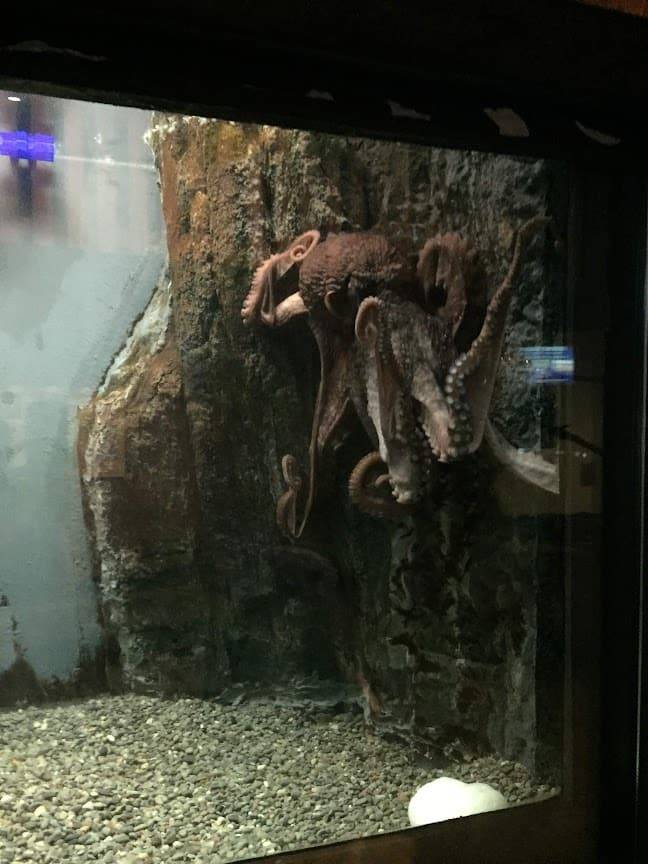
Calling an animal well camouflaged means asking how it appears against a background to a potential observer. The result depends on viewing angle, light, movement and distance. A clearly visible octopus in a brightly lit aquarium photograph may have been much harder to detect before the camera or lighting drew attention to it.
Avoid treating a human viewer's impression as the only measure of success. Other animals do not necessarily see a scene exactly as we do. The useful question is not simply whether a photograph looks convincing on a screen, but how the animal's appearance interacts with a particular environment and the sensory abilities of animals around it.
Not every striking display is an attempt to disappear
Cephalopod appearance can change in ways that make an animal more conspicuous as well as less visible. The Smithsonian discusses both disguise and conspicuous displays. A dramatic contrast does not automatically mean camouflage has failed. A short clip, without information about the species and situation, may not explain the function of the change.
That uncertainty should encourage better observation rather than an invented emotional translation. A color shift is not a universal subtitle saying angry, happy or frightened. The surrounding behavior, species and circumstances matter. Researchers study these patterns systematically because visual impact alone is not enough to identify their meaning.
A video can reveal what a still image cannot
When watching reliable footage, note what happens before and after a change. Does the animal cross a different surface? Does its posture change with the pattern? Does it remain still or begin moving? These observations help separate the components that a dramatic edit may compress into a single astonishing moment.
Also check whether the sequence is continuous and whether the animal has been identified. Different cephalopods have different abilities. A film about a cuttlefish can illustrate related mechanisms without proving that every octopus uses the same pattern in the same way. Names and context make the visual evidence more useful.
Appreciate the ability without provoking it
If you encounter an octopus while snorkeling or diving, follow local wildlife guidance and keep an appropriate distance. Do not prod it, move it onto a contrasting surface or block its path to obtain a more dramatic color change. An undisturbed observation is more valuable than a display caused by unnecessary interference.
The same principle applies to other remarkable animal behavior. Our feature on crow tool use explores how careful evidence can deepen interest without turning animals into performers for a camera. A good explanation adds context to the spectacle rather than requiring a more intrusive spectacle.
An octopus's changing appearance is impressive because it combines several physical systems in one flexible animal. Pigment controls part of the visible pattern, skin structures alter texture and posture reshapes the whole presentation. Look beyond the idea of a simple color switch and the familiar camouflage video becomes even more extraordinary.