What Cat Whiskers Do and Why They Matter
Cat whiskers are sensory structures, not decorative hairs. Explore their role in close-range awareness and body language, plus why they should never be trimmed.
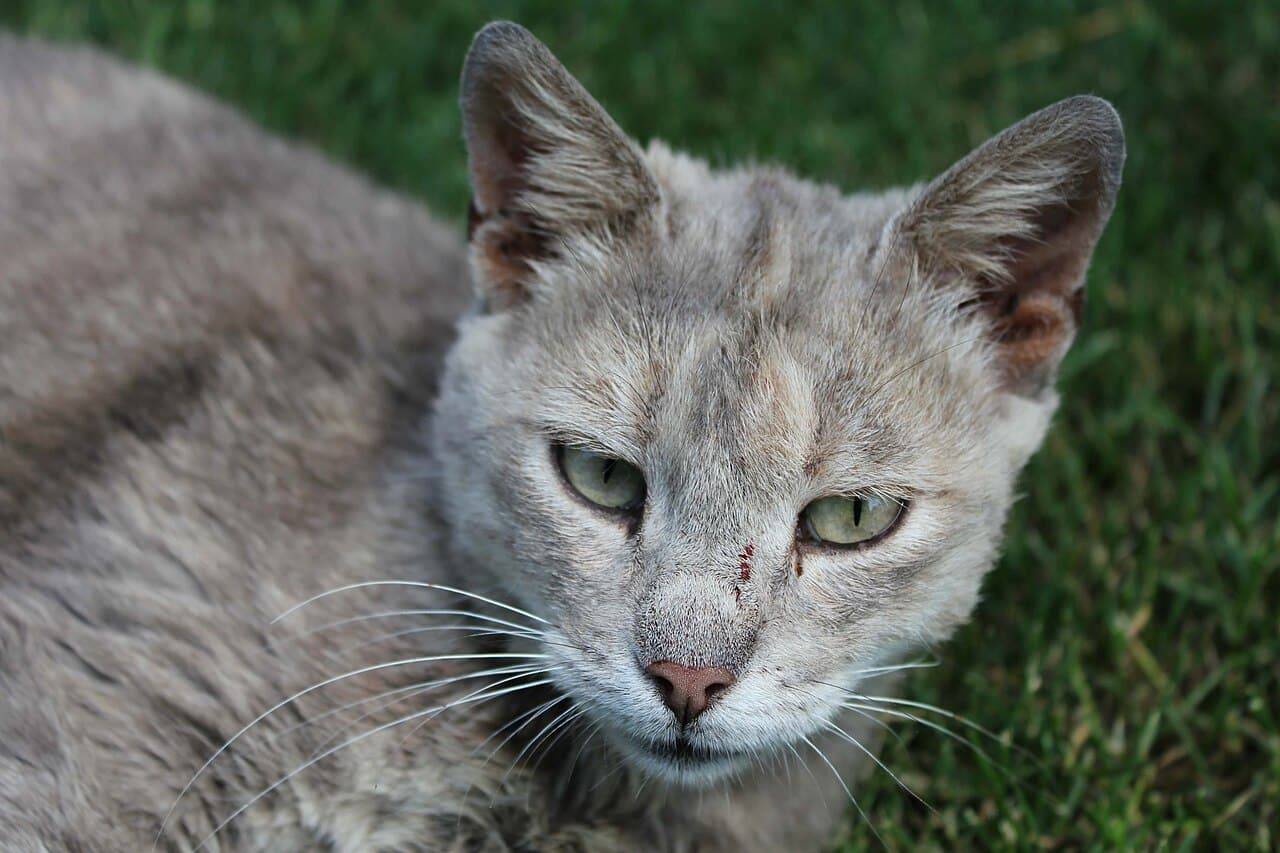
A cat's whiskers are easy to notice and easy to underestimate. They frame the face, move as the animal investigates something and sometimes appear as a single shed hair on the sofa. Their importance goes far beyond appearance. Whiskers are part of a sensory system that helps a cat gather information at close range. Understanding that role changes how we handle, photograph and interpret the animals sharing our homes.
A whisker is connected to a sensitive system
Whiskers are specialized hairs with deeply embedded bases associated with sensory structures and nerves. Movement of a whisker can provide information to the nervous system. Cats Protection describes them as tools for sensing nearby objects and movement, helping the cat negotiate its surroundings. The visible hair is only part of the system; the sensitive base is what makes its movement informative.
That is why treating a whisker like a stray decorative hair misses the point. Trimming does not improve its usefulness or tidy up an unnecessary feature. Leave whiskers alone and avoid pulling, bending or deliberately touching them as an experiment. A cat's tolerance of handling does not make an intrusive test necessary.
They matter close to the face
Imagine approaching an object so closely that ordinary visual inspection is no longer the whole task. Whiskers help provide information in that near space. They can contact an object and detect small movements around the animal. They work alongside the cat's other senses rather than replacing them with an independent radar system.
This distinction makes a household observation more useful. When a cat investigates a box, it may look, smell and move its whiskers as part of the same sequence. There is no need to assign the entire behavior to one sense. The interesting feature is the combination of information sources available to the animal.
Whiskers are not confined to the cheeks
The most conspicuous whiskers sit beside the nose, but whisker-like sensory hairs also occur in other locations, including above the eyes and on the front legs. Cats Protection's illustrated explanation highlights this wider distribution. Looking carefully at an ordinary photograph can reveal structures you had previously grouped together as facial fur.
Observation should remain comfortable for the cat. There is no need to hold an animal still, lift its paws or bring a camera directly into its face to locate every hair. A relaxed cat in good light offers a better opportunity than a staged examination. If it turns away or leaves, let the inspection end.
A gap is more complicated than a measuring tape
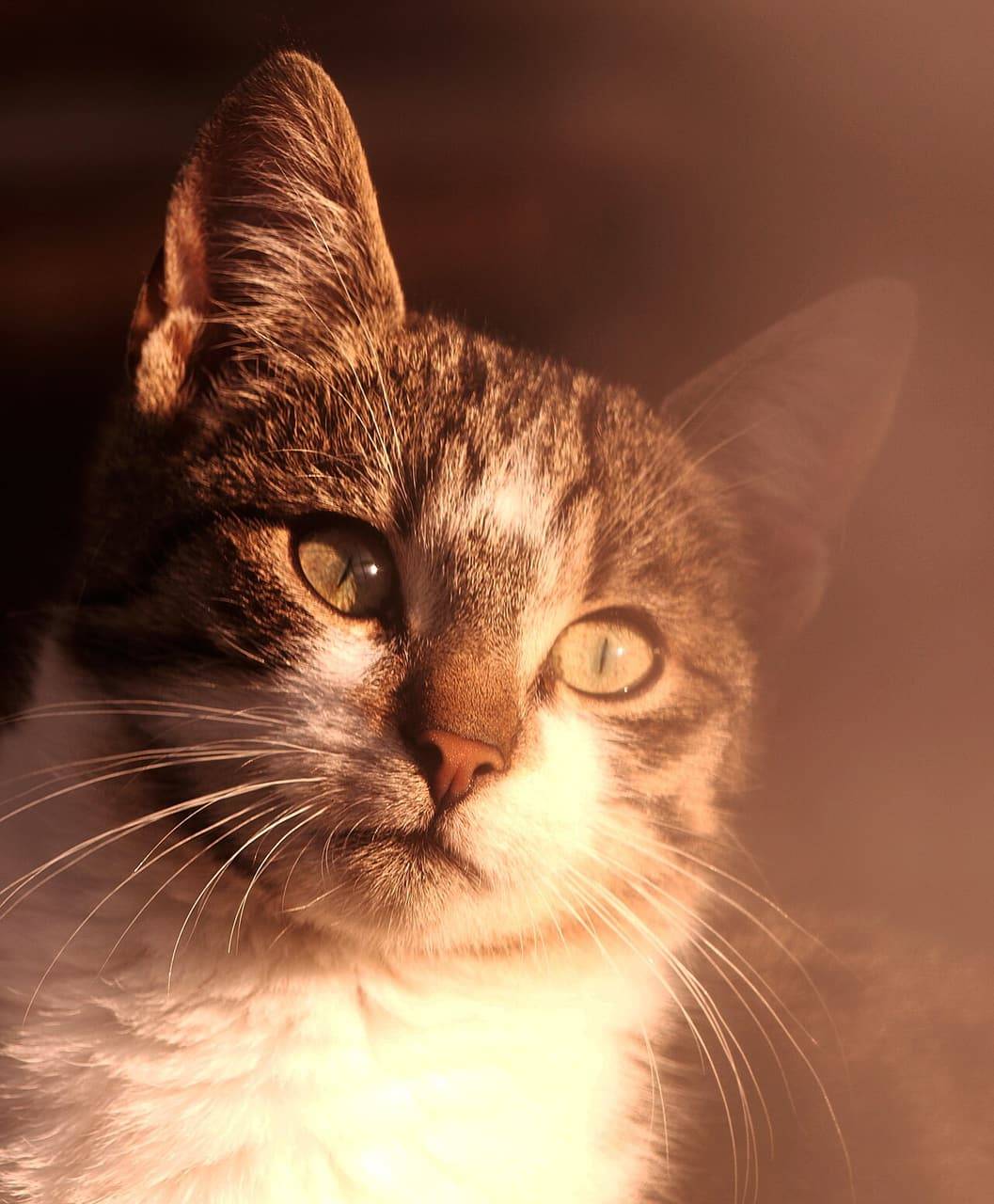
Whiskers can contribute to awareness of nearby surfaces and spaces, but the popular image of a perfect body-width ruler is too simple to use as a safety rule. A cat's decision to investigate an opening is not proof that the opening is safe. Body condition, the shape of the space and possible obstacles all matter.
Keep hazardous gaps, appliance spaces and places where an animal could become trapped inaccessible. Do not construct a narrow passage to test whether the whiskers predict a successful squeeze. The practical lesson is to respect the sensory role while taking responsibility for the environment, rather than expecting the cat's anatomy to prevent every accident.
Position can contribute to body language
Whiskers can move forward or lie closer to the face, and their position may contribute to what a cat communicates. However, a single feature is not a complete emotional label. Consider the ears, body, tail, activity and situation together. A photograph captures a fraction of a second and can be especially easy to misread.
If a cat is repeatedly uncomfortable during an interaction, reduce the pressure rather than waiting for a particular whisker position to confirm it. Give the animal a route away and seek qualified advice for persistent behavioral concerns. Reading body language is most useful when it helps us respond considerately, not when it produces confident stories about a still image.
Do not trim them for appearance
Cats Protection explicitly advises against cutting whiskers. A grooming routine should account for that, whether you handle the cat at home or use professional help. Explain any concern about damaged or unusual whiskers to a veterinarian instead of trying to make both sides match with scissors.
Finding an occasional shed whisker is different from deliberately removing one. If you notice an abrupt change, skin problems, apparent discomfort or other concerning signs, ask a veterinarian rather than assuming the cause. A general explanation of whisker biology cannot establish why a particular cat's appearance has changed.
Make ordinary observation more rewarding
Watch a relaxed cat explore a familiar safe object and notice the sequence: looking, approaching, sniffing and changing position. You may begin to see how much information gathering occurs in a few quiet seconds. The same shift in attention makes a dog’s sniffing walk more interesting; an animal's pauses are not necessarily empty time.
Avoid turning observation into a performance. The cat does not need a new obstacle, a startling stimulus or repeated handling for the behavior to be worth noticing. A respectful distance often reveals more than an attempt to provoke a dramatic response.
Whiskers remind us that familiar animals possess sensory equipment we do not share in the same form. Their role is specific and physical, yet it changes how a cat meets the world. Leave them intact, read behavior in context and let an everyday encounter become an opportunity to notice rather than interfere.