What the Honeybee Waggle Dance Really Communicates
The honeybee waggle dance conveys direction and distance to other workers. Explore how a vertical comb becomes a reference system and what dance observations can reveal.
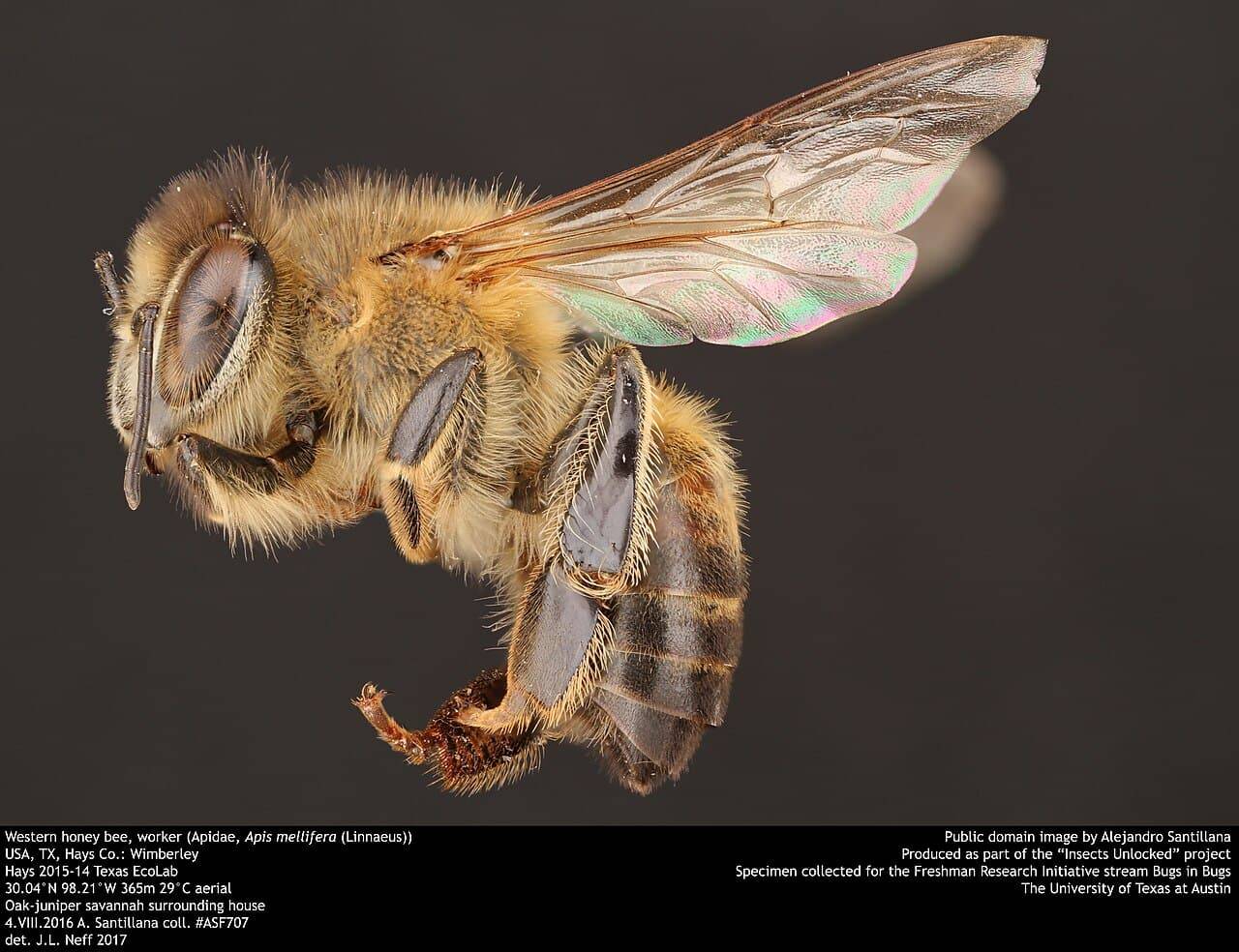
Inside a honeybee colony, a returning forager can communicate something remarkable about a place outside. A sequence of movements on the comb carries information about the direction and distance of a resource. The waggle dance is often described as an animal language, but its interest becomes clearer when we examine the actual information involved. A dark hive, a moving sun and a distant flower patch are connected through a surprisingly compact signaling system.
Begin with the forager's journey
A worker finds a useful resource outside the nest, then returns to a colony whose members have not all visited that location. The challenge is to communicate useful spatial information without leading every recruit along the entire route. University of Sussex researchers describe waggle dances as a way for foragers to indicate the direction and distance of profitable flower patches.
That is more specific than saying the bee announces that food exists. A useful message needs to help another animal search in an appropriate area. Think of the difference between hearing there is a café somewhere in town and receiving a direction and approximate distance from a shared starting point.
The waggle run is the central feature
The dance includes a central run during which the bee waggles, with return movements that allow the sequence to repeat. Researchers pay particular attention to the orientation and duration of that central run. Those measurable features are important because a casual description such as dancing enthusiastically does not explain the spatial information.
Watching from a human perspective, the movement can seem small and crowded. Other bees encounter it at close range inside the colony. A video that makes the dance visible is therefore an aid to human observation, not a complete representation of every sensory cue available to the bees following it.
Direction uses a shared reference
On a vertical comb, the angle of the waggle run relative to upward corresponds to the direction of the resource relative to the sun's position. The insect-navigation review by Collett and colleagues explains this relationship between gravity inside the nest and a sun-related direction outside. It is a reference system, not a miniature drawing of the countryside.
An analogy can help: a direction such as left makes sense only if speaker and listener share a frame of reference. The bee's system solves its own spatial problem through a biological arrangement. The analogy should not be stretched into a claim that bees visualize a human-style map or use words in their heads.
Duration contributes distance information
The duration of the waggle run is related to distance, with longer runs generally associated with farther resources. That relationship gives researchers something to measure and decode. It also explains why a photograph of one moment cannot reveal the full message: timing matters as well as orientation.
Avoid interpreting the dance as an exact street address. Real navigation involves conditions outside the hive, and a recruit still has to locate a resource in the environment. Direction and distance information are powerful without requiring the system to operate like a modern satellite-navigation application with a visible route and numbered destination.
The colony does not need one central planner
The University of Sussex describes how scouts and returning foragers help a colony respond to shifting flower resources. The larger pattern emerges from many workers finding, using and communicating about opportunities. No single bee needs a complete survey of every flower patch available to the colony.
That is one reason the dance interests researchers studying collective behavior. Information can influence where effort is directed without a human-style manager issuing assignments. The system is easier to appreciate when you follow the interactions between workers rather than searching for one individual who must know everything.
Researchers can turn movements into data
To study dances, researchers record repeated observations and measure features systematically. Knowing when and where a dance was recorded helps relate its orientation to the sun and the surrounding landscape. A decoded pattern can then contribute evidence about where the colony has been foraging, subject to the methods and limits of the study.
This differs from selecting the most dramatic clip and guessing what it means. Repetition, measurement and clear definitions make the information scientifically useful. The approach resembles other animal-behavior work, including experiments on how crows select tools: an impressive observation becomes more revealing when the question and evidence are precise.
Watch without opening a hive yourself
An observation hive at an appropriate educational venue or a reliable research video is a good way to see the behavior. Do not open or interfere with a colony to look for a dance. Honeybee management requires knowledge, suitable equipment and attention to the safety of both people and bees.
If watching footage, identify the central run and notice how it repeats. Look for an explanation of the viewing angle and recording setup. A clear demonstration should help you distinguish the measured signal from the surrounding movement, rather than expecting you to decode an entire colony from a few seconds of film.
The waggle dance is extraordinary because it connects a journey to a shared signal. Direction, distance and repeated movement allow information collected by one worker to become useful to others. Understanding those components makes the familiar image of a dancing bee much richer than a charming display inside a hive.